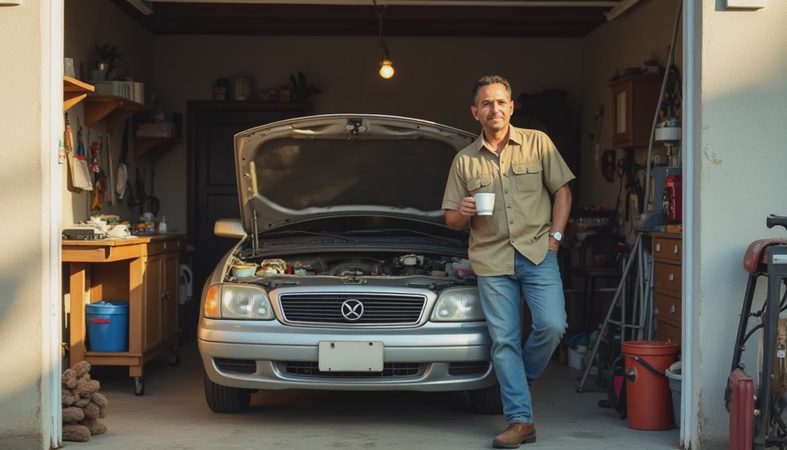
My first real lesson in used cars cost me a transmission.
The car was a 2003 Dodge Intrepid. It looked clean, drove fine around the block, and came with a Car fax report that didn’t show anything scary. The seller had a believable explanation for everything. The mileage made sense. The interior looked better than I expected.
I wanted the car to be good, so I treated every reassuring detail as proof that it was.
A few weeks later, the transmission started slipping. At first, it was just a hesitation pulling away from a stop. Then the engine would rev while the car took its time deciding whether to move. Not long after that, the transmission gave up completely.
The repair estimate was more than the car was worth.
That was the first time I learned the rule behind this entire website:
Buy the car, not the story.
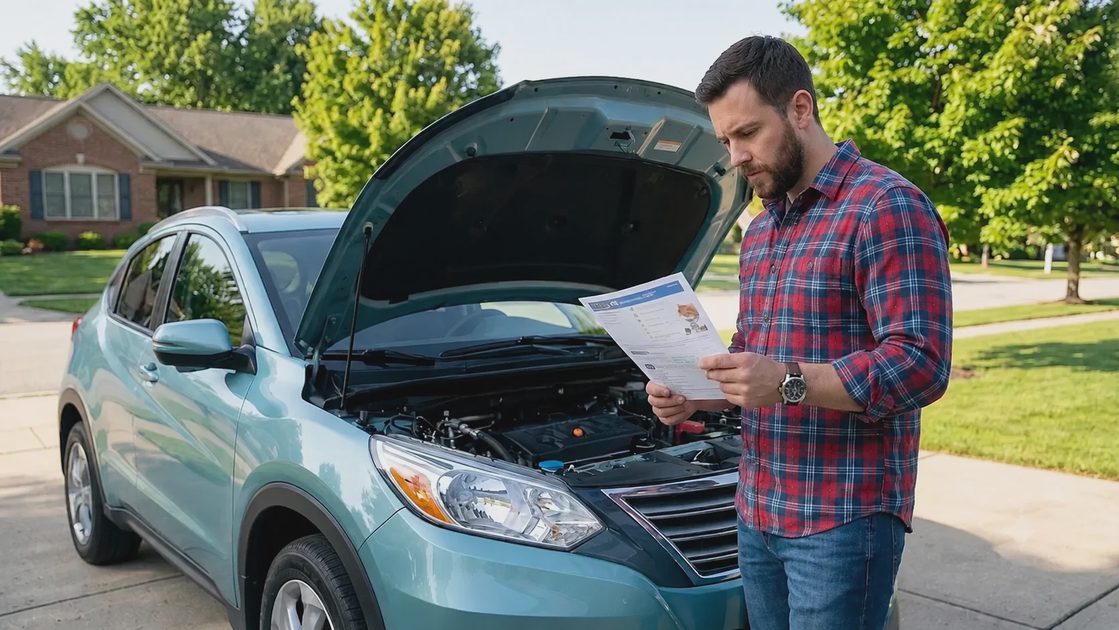
A Good Story Is Not a Good Car
Used cars almost always come with a story.
“It belonged to my mother.”
“It was mostly highway miles.”
“The warning light is only a sensor.”
“It just needs a cheap fix.”
“I have another buyer coming tonight.”
Some of those stories are true. Most sellers aren’t criminal masterminds, and I don’t believe every dealership is waiting to rob you. But a true story still doesn’t make a bad car good.
Maybe it really did belong to someone’s mother. That doesn’t tell you whether she changed the oil.
Maybe those miles were mostly on the highway. That doesn’t erase neglected coolant, worn suspension components, or an overdue timing belt.
And if the repair is really cheap and easy, you should ask why the seller hasn’t done it.
The Intrepid taught me that I wasn’t buying based on evidence. I was buying based on a version of the future I had already imagined. I could see myself driving the car, and once that happened, I started explaining away the warning signs.
That mistake changed how I shop.
Eighteen Cars and a Glovebox Notebook
Over the last 20 years, I’ve personally bought 18 used cars.
Some were Hondas and Toyotas that kept going long after they looked ready to retire. Some were Fords and Subarus that taught me the difference between normal maintenance and a monthly payment to your mechanic. One was that deeply regretted Dodge.
I’m not a dealer, and I’ve never worked in the auto industry. I’m a construction project manager in Los Angeles. During the week, I run commercial build-outs, track schedules, question estimates, and look for problems before they become expensive.
It turns out that buying a used car requires a lot of the same habits.
Don’t trust a finish just because it looks clean. Check what’s underneath. Ask for documentation. Verify the timeline. Leave room in the budget for surprises. And never let someone else’s deadline become your emergency.
I can handle brakes, fluids, belts, and basic diagnostics. I also know when I’m out of my depth and need to pay a real mechanic. Knowing that limit has saved me nearly as much money as learning to turn a wrench.
These days, I keep a notebook in my glovebox. It contains details from cars I’ve test-driven, flaws I almost missed, questions that made sellers uncomfortable, and repair costs I wish I had known before buying.
It’s not a trophy case. It’s a ledger.
I’ve lost money so you don’t have to. Here’s the ledger.
The Test Drive That Started This Blog
This website started because my neighbor asked me to help him buy a used Honda CR-V.
He had found one that looked promising. The photos were clean, the mileage was reasonable, and the asking price was close enough to fair that it felt worth seeing.
During the test drive, I started doing what I normally do.
I checked the tires to see whether they matched and wore evenly. I looked for overspray around the body panels. I tested every window and switch. I listened during cold startup. I paid attention to how the transmission shifted before the car warmed up. I found an empty road and checked whether it tracked straight under braking.
My neighbor kept asking why.
Why does uneven tire wear matter? Why check the oil before the engine starts? Why turn off the radio? Why does fresh undercoating make you suspicious? Why ask to see the title before discussing price?
Halfway through the drive, I realized something obvious:
Regular people need someone in their corner who isn’t trying to sell them anything.
There is plenty of car information online, but much of it arrives in pieces. One person tells you which model to buy. Another explains how to replace a failed part. A pricing site tells you what a car should cost. A history report gives you a list of recorded events.
None of those things can make the decision for you.
And none of them replaces knowing what to look for when the car is sitting directly in front of you.
What You’ll Find Here
Car Lot Truth is a used-car buyer’s survival guide.
This site is for people buying a second, third, or fourth car—not a fantasy car. You have a family, a mortgage, a job, and a budget. You can probably absorb a few hundred dollars in maintenance. You cannot afford to be wrong about a $15,000 purchase.
Here’s what I’ll cover:
The Test Drive
Practical inspections you can do with your eyes, ears, hands, and nose. No lift and no professional scan tool required.
We’ll talk about warning lights, fluid leaks, strange smells, rust, tire wear, cold starts, bad repairs, and the difference between an old-car noise and a walk-away noise.
The Paperwork
Titles, liens, vehicle history reports, odometer records, financing, insurance, and the documents you need before money changes hands.
This is the boring category. It may also save you the most money.
The Long Haul
Six-month and one-year ownership reports with real numbers: purchase price, maintenance, repairs, insurance, fuel, and what I would do differently.
Buying the car is one day. Owning it is the real test.
Family Hauler
Car seats, strollers, back-seat space, road trips, safety, and whether the family can actually live with the car.
My daughter Sofia has the “can I nap back here?” test. My wife Lisa has the “are you sure about this one?” test. Lisa’s test has prevented more bad purchases.
Garage Talk
Stories, opinions, bad advice, industry observations, and the occasional rant from someone who has spent too many Sundays looking at cars he wasn’t planning to buy.
I’ll be direct, but I’ll be fair. I won’t name individual dealers or private sellers. The goal is to understand the car and the process—not to send an angry crowd after someone.
What I Won’t Do
I won’t pretend there is one perfect used car for everyone.
I won’t tell you every high-mileage car is a bargain or every warning light is a disaster. Context matters.
I won’t bury you in mechanical jargon. If I mention a blown head gasket, I’ll explain what that means: the seal between major parts of the engine has failed, which can let oil and coolant mix, cause overheating, and lead to a repair bill worth thousands.
I won’t recommend a vehicle because a manufacturer paid me to. I don’t have dealer relationships, and I’m not here to move inventory.
Most importantly, I won’t pretend I’ve never been wrong.
The mistakes are the useful part.
Keep This in Your Phone
Before you buy any used car, answer these five questions:
Did I see the car start from completely cold?
Did I verify the title, VIN, and seller’s identity?
Did I test every major feature without the radio playing?
Did an independent mechanic inspect it—or did I knowingly accept the risk of skipping that step?
Would I still buy this car if the seller’s story turned out to be false?
If the answer to the last question is no, you’re buying the story.
Welcome to my garage. The coffee is on the workbench, the hood is open, and there’s always room for one more person who doesn’t want to learn everything the expensive way.
Buy the car, not the story.


