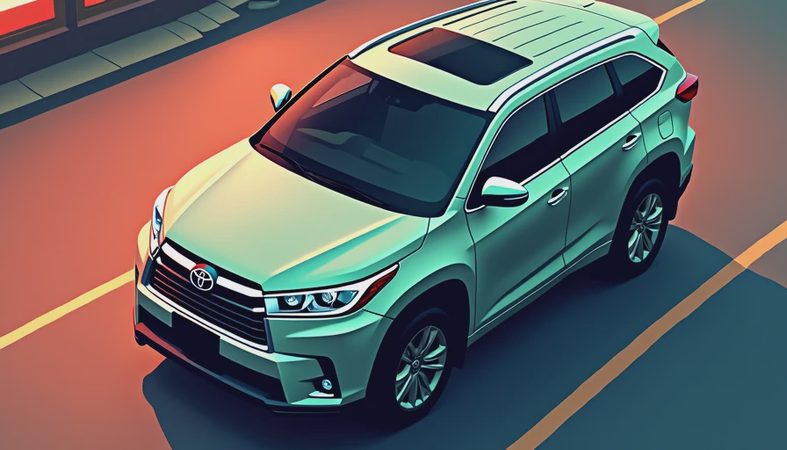
A 2015 toyota highlander can be a terrific family hauler, but it is not automatically a smart buy just because the badge says Toyota. I have watched buyers pay extra for a clean-looking SUV, then discover neglected fluids, worn suspension, and a maintenance history that existed only in the seller's imagination. Your job is not to find the prettiest Highlander in the parking lot. Your job is to find the one with the fewest expensive surprises.
The 2015 model belongs to the third-generation Highlander, which brought a quieter cabin, useful safety technology, and more usable third-row space than the older version. It came with a four-cylinder engine, a stronger V6, and a hybrid powertrain. Most used examples have the V6, and that is usually the engine I would choose for a full family load. Start with the vehicle history, then inspect the actual car. Buy the car, not the story.
Which 2015 Highlander configuration makes sense?
The four-cylinder version is generally the budget choice. It can handle commuting and light family duty, but acceleration gets strained when the SUV is loaded with passengers, luggage, or a small trailer. The 3.5-liter V6 is smoother and better suited to road trips. Properly equipped V6 models can tow up to about 5,000 pounds, but never assume a tow package exists because the seller says the vehicle is “tow-ready.” Look for the equipment and verify the rating by VIN and documentation.
A 2015 toyota highlander may have front-wheel drive or all-wheel drive. All-wheel drive can help on wet roads and mountain trips, but it adds weight, mechanical components, and potential repair expense. The Hybrid is appealing if fuel economy matters, although its battery and specialized systems deserve a careful evaluation. Seating is another detail: some versions have second-row captain's chairs and seven seats, while others have a bench and eight seats. Put your children, car seats, or regular passengers in the actual vehicle before deciding.
Trim names such as LE, LE Plus, XLE, and Limited tell you about equipment, not condition. A low-mileage LE with complete records can be a better purchase than a neglected Limited with shiny wheels.
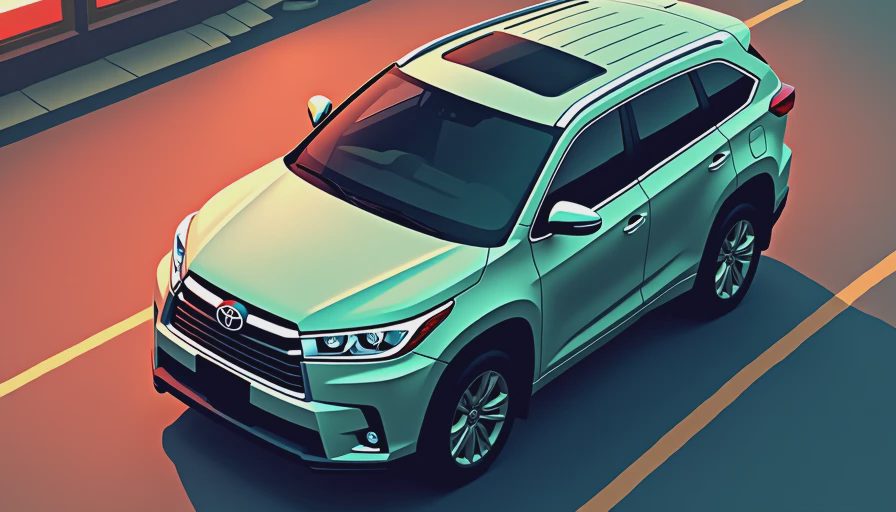
What to inspect before you make an offer
See the 2015 toyota highlander with a cold engine. Ask the seller not to warm it up before you arrive. During startup, listen for unusual rattling, tapping, or a rough idle. A brief normal startup sound is different from a persistent metallic noise. Check the exhaust for blue smoke, which can suggest oil consumption, and watch for thick white smoke after the engine has warmed up.
Open the hood with a flashlight. Look for oil around the valve covers, coolant residue near hoses and the water pump area, and evidence that someone sprayed the engine to hide leaks. A small seep is a negotiation point; an active drip is a reason to pause. Check the oil level and condition, but remember that fresh oil does not prove good maintenance.
On the road, the transmission should shift smoothly without a flare in engine speed between gears, a hard engagement, or a delay when selecting reverse. Test the brakes from several speeds. Pulsation through the pedal or steering wheel can mean warped rotors or other brake work. Drive over a rough section with the radio off. Clunks from the front end may point to worn links, bushings, or struts. Those repairs are not necessarily catastrophic, but a collection of “small” repairs can quickly consume $1,500 or more.
Test every feature: air conditioning, heated seats, power liftgate, backup camera, windows, locks, warning lights, and the third-row seat. A replacement camera or electronic module can cost far more than the seller's promised discount.
Pricing, mileage, and the inspection fee
Pricing depends heavily on region, mileage, drivetrain, trim, accident history, and service records. As a rough shopping range, many 2015 Highlanders appear in the mid-teens to low-$20,000s, with high-mileage examples below that and exceptionally clean, lower-mileage versions above it. Treat online listings as asking prices, not proof of value. A $17,500 SUV with new tires and documented service may be a better deal than a $15,900 example needing tires, brakes, and a timing-related repair.
A 2015 toyota highlander with 130,000 miles is not automatically too old. Highway miles and consistent maintenance can matter more than the odometer alone. Ask for invoices, not just a folder of vague oil-change stickers. Match the VIN on the dashboard, door label, title, and service records. Run a vehicle-history report, but do not treat a clean report as a mechanical inspection. My old Dodge had a clean report too, right before the transmission became a very expensive paperweight.
Spend roughly $150 to $250 on a pre-purchase inspection from an independent shop that does not sell the vehicle. That fee can identify leaks, accident repairs, tire mismatches, rust, and stored diagnostic codes. If the seller refuses an independent inspection, walk away. A cooperative seller is not proof of a good car, but an evasive seller is useful information.

Common ownership costs people forget
The purchase price is only the opening number. Four tires for an all-wheel-drive Highlander can easily run $600 to $1,000 depending on size and brand. Brake work may cost several hundred dollars per axle, while suspension repairs, cooling-system work, or air-conditioning repairs can push a first-year budget toward $2,000 or more. Leave room for registration, sales tax, and an immediate fluid service if records are incomplete.
Get insurance quotes using the exact VIN before buying. A 2015 toyota highlander is generally less costly to insure than a brand-new three-row SUV, but premiums still depend on your location, driving history, coverage limits, deductible, annual mileage, and whether you choose comprehensive and collision coverage. Liability-only coverage can reduce the bill, but it will not pay to repair your Highlander after an at-fault crash. If you finance it, the lender will typically require comprehensive and collision coverage.
Compare quotes from carriers such as State Farm, GEICO, Progressive, and regional insurers, then compare the coverage limits rather than only the monthly price. Raising a deductible from $500 to $1,000 can lower premiums, but only choose that option if you can cover the larger out-of-pocket amount after a claim.
My buying process at the lot
For a 2015 toyota highlander, I use a simple order. First, confirm the VIN and ask for the title, service records, and any loan information. Second, inspect the body in daylight for mismatched paint, uneven panel gaps, glass-date differences, and tire wear. Third, drive it cold and warm, using city streets, a highway, and a parking-lot turn at full steering lock. Fourth, scan for warning lights and pay an independent mechanic. Finally, price every repair identified by the inspection before negotiating.
Do not negotiate from emotion. If the SUV needs $900 in tires and $700 in brakes, that is $1,600 in real ownership cost, even if the seller calls the problems normal wear. A reasonable offer reflects those expenses. If the seller will not move and the inspection is mediocre, there will be another Highlander.
Screenshot this before you buy
Write down these checks and use them at the lot:
- Match the VIN on the car, title, and records.
- See the engine start cold and inspect for leaks or smoke.
- Test shifting, braking, steering, air conditioning, cameras, and liftgate.
- Check tire age, tread depth, brake condition, and uneven wear.
- Confirm the exact seats, drivetrain, tow equipment, and trim.
- Get an independent pre-purchase inspection.
- Price insurance, taxes, registration, and immediate repairs.
- Walk away if the seller blocks an inspection or hides paperwork.
The right 2015 toyota highlander can serve a family for years, but only when the maintenance history and mechanical condition support the price. Take your time, bring a flashlight, and keep enough cash for the first repair instead of spending every dollar on the purchase. Buy the car, not the story.


