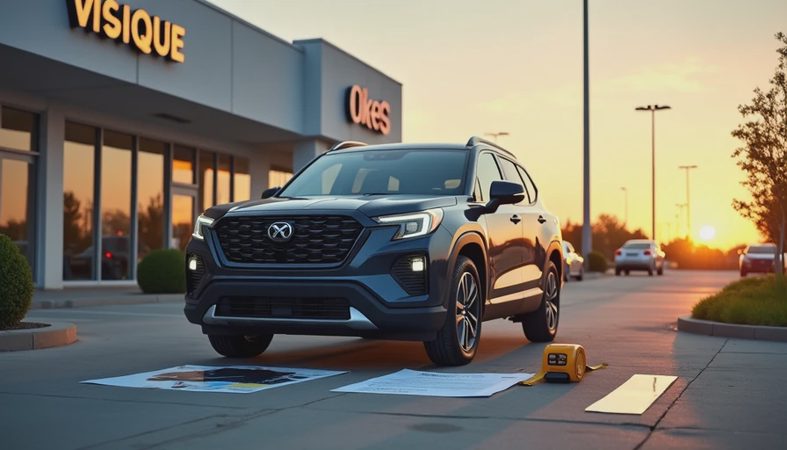
The honda pilot 2024 is the kind of family SUV that looks sensible on paper: three rows, a V6, useful cargo space, and a cabin that does not feel like punishment on a long drive. But sensible does not mean automatically safe to buy used. I have looked at enough clean-looking vehicles with expensive secrets to know that the badge is only the beginning. Before you spend $30,000 or more, learn what changed, which trim fits your life, and what the seller's paperwork is really telling you.
What you get with the 2024 Pilot
The honda pilot 2024 belongs to the fourth-generation Pilot redesign that began for the 2023 model year. It uses a naturally aspirated 3.5-liter V6 and a 10-speed automatic transmission. Front-wheel drive is available on several trims, while all-wheel drive is offered or standard depending on the version. Maximum towing capacity can reach 5,000 pounds when properly equipped, but do not assume every Pilot on a listing can tow that much. The hitch, equipment, and configuration matter.
The trim walk is fairly easy to understand. The LX is the basic entry point, while the Sport adds a more aggressive appearance and extra equipment. EX-L is often the sweet spot for families because it brings leather seating, a power liftgate, and useful comfort upgrades without jumping to the most expensive versions. Touring adds technology and premium touches, and Elite is loaded. TrailSport is aimed at buyers who want more ground clearance, all-terrain tires, and a tougher appearance for camping roads rather than serious rock crawling.
New pricing started in the high-$30,000s before destination charges, and well-equipped versions climbed into the mid-$50,000 range. On today's used market, mileage, location, condition, and trim can move the price dramatically. A clean, lower-mile EX-L may sit around the low-to-mid $30,000s, while an LX with 50,000 miles could be much less. Compare at least five similar listings before treating one seller's price as normal.
The inspection mistakes that cost real money
When I inspect a honda pilot 2024, I start with the boring stuff. Look at the tires first. Uneven wear across one tire can point to alignment, suspension, or accident damage. A matched set of quality tires might cost $700 to $1,100 installed, so bald rubber is not a small bargaining point. Check the wheels for fresh scratches and look underneath for bent plastic, scraped exhaust parts, or oil residue.
Start the engine cold if possible. A warm engine can hide a rough start or a warning light that was recently cleared. Listen for rattles, watch the exhaust, and confirm that the dashboard lights come on briefly at startup and then go out. If the check-engine light never illuminates during the startup sequence, ask why. Someone may have removed a bulb or used a scan tool to hide a problem.
The honda pilot 2024 has a modern driver-assistance system, but features are only useful when they work correctly. Test the backup camera, blind-spot alerts, adaptive cruise control, lane-keeping assistance, parking sensors, and every switch. A sensor or camera repair can run from a few hundred dollars to well over $1,000 depending on the damaged component and calibration. A seller who says, “It just needs a reset,” should prove that with a repair invoice, not a shrug.
Drive over rough pavement, not just around the block. The steering should feel straight, the brake pedal should be firm, and the 10-speed should shift without repeated harsh jolts. A single awkward shift does not prove the transmission is failing, but hesitation, slipping, or a clunk that repeats under different conditions deserves a professional diagnosis.
Records, recalls, and the ownership bill
A honda pilot 2024 with 30,000 miles and consistent service records is usually a stronger purchase than one with 18,000 miles and no documentation. Ask for oil-change receipts, tire invoices, brake work, and evidence of the scheduled maintenance. Digital records are fine if they show dates, mileage, and the vehicle identification number. A clean Carfax is helpful, but it is not a mechanical inspection. My old Dodge had a clean report and a transmission problem that still emptied my wallet.
Run the VIN through Honda's official recall lookup before buying. Recall work is generally completed at no charge by an authorized dealer, but an open campaign still matters because you need to know whether the repair is pending. Also ask whether the SUV has been in a flood, used for towing, or driven on salted winter roads. Water stains under carpeting, rust on seat mounts, or a musty smell can reveal a flood car that photographs beautifully.
Budget beyond the payment. Oil service, filters, tires, brakes, registration, and unexpected sensors can easily add $1,000 to $2,000 during the first year of ownership. Get an insurance quote using the exact VIN before you negotiate. A honda pilot 2024 may cost more to insure than an older Pilot because replacement parts, cameras, airbags, and repair calibration affect claims. Compare liability limits, collision and comprehensive deductibles, and rental-car coverage instead of choosing only the cheapest monthly number.

Which used trim makes the most sense?
For a family trying to control the budget, the EX-L deserves a close look. Leather is easier to clean after spilled juice, and the power liftgate is genuinely useful when both hands are full. The Touring can make sense if you regularly take long trips and value its additional comfort and technology, but inspect every electronic feature before paying extra for it.
The TrailSport needs a more careful price comparison. Its styling and equipment are attractive, but all-terrain tires can create more road noise and cost more to replace. Inspect the underbody for evidence that the previous owner treated it like a serious off-road truck. Scrapes on the skid plates or bent suspension components are clues to negotiate hard or walk away. The honda pilot 2024 is capable on dirt roads, but it is still a large family crossover, not a purpose-built 4x4.
Do not overlook the seating layout. Some versions offer second-row captain's chairs, while others use a bench. Put a child seat in the actual vehicle, climb into the third row, and check whether your normal cargo fits behind it. Bring Sofia's imaginary swim gear, a stroller, or whatever your household really carries. Brochure measurements do not tell you whether the layout works on a Tuesday morning.
My lot-day checklist
Before meeting the seller, save the listing photos and note the advertised mileage, trim, and equipment. At the vehicle, match the VIN on the dashboard, doorjamb, title, and insurance documents. Inspect the exterior in daylight, start it cold, test every electronic feature, and drive for at least 20 minutes. Include city streets, a faster road, tight turns, braking, and rough pavement.
Then pay for a pre-purchase inspection from an independent mechanic. Spending $150 to $250 can expose worn brakes, accident repairs, fluid leaks, tire problems, or stored diagnostic codes. Do not use the seller's preferred shop unless you independently trust that shop. If the seller refuses an inspection, the inspection has already done its job: it told you to leave.
The honda pilot 2024 can be a strong used family SUV, but condition beats trim and paperwork beats a polished sales pitch. Price the vehicle against real local comparisons, reserve cash for first-year repairs, and verify the insurance cost before signing. Buy the car, not the story. Print this checklist, keep it on your phone, and let the evidence—not the shiny paint—make the decision.


