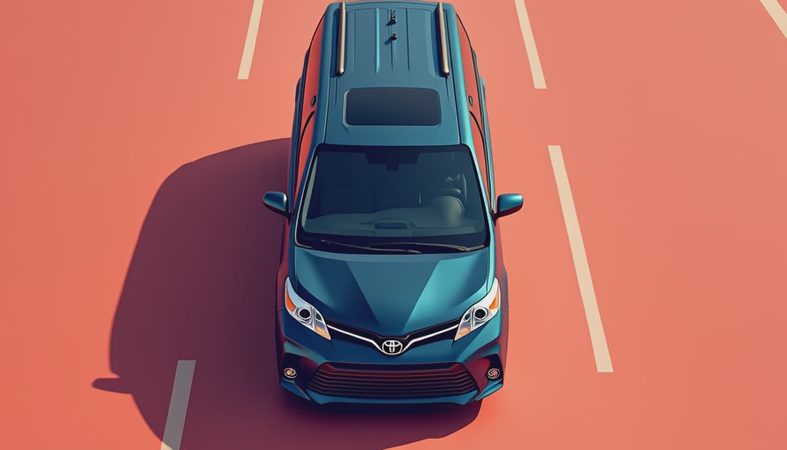
The Toyota Sienna AWD is one of the few minivans that can carry a family, handle a snowy driveway, and still make sense as a used purchase. But four-wheel traction does not magically turn a neglected van into a good deal. I have watched buyers pay extra for an AWD badge while ignoring bald tires, overdue fluids, and a transmission that shifted like a shopping cart with one bad wheel. Buy the car, not the story.
Which Toyota Sienna AWD years deserve your attention?
The first question is which generation fits your budget. Older Sienna AWD models from roughly the mid-2000s can be inexpensive, sometimes appearing around $5,000 to $10,000 depending on mileage and condition. That price is tempting, but a twenty-year-old minivan can need suspension work, air-conditioning repairs, sliding-door fixes, and rubber components all at once.
The 2011-2020 generation is where I would start for most families. These vans offer useful cabin space, available all-wheel drive, and a more modern safety package than the older models. A clean 2013 to 2016 example often lands in the broad $14,000 to $23,000 range, while a later 2018 to 2020 van with reasonable mileage can cost more than $25,000.
The 2021 redesign changed the formula. It uses a hybrid powertrain and offers an electric all-wheel-drive system rather than a traditional mechanical setup. That Toyota Sienna AWD can be efficient and quiet, but the purchase price is usually higher, and you should have a qualified shop inspect the hybrid system before signing anything. A cheap 2021 model with a vague history is not automatically a bargain.

What AWD adds, and what it does not
AWD helps send power to wheels with better traction when roads are wet, loose, or slippery. It is useful on a steep driveway and reassuring during winter trips. It does not shorten every stopping distance, make worn tires safe, or replace careful driving. Braking still depends heavily on tire condition, road surface, and speed.
That matters because AWD vans often wear tires differently when alignment or suspension parts are tired. Walk around the vehicle and run your hand across each tread. Feathering, where the tread feels saw-toothed, can point to alignment or worn suspension. Measure tread depth rather than accepting a seller's claim that the tires are “still good.” A matched set is important on an AWD vehicle; four tires with noticeably different wear can create drivetrain stress.
Ask whether the tires were replaced as a complete set and whether the van has a full-size spare or a temporary emergency spare. Also look underneath for leaks near the transfer components and rear differential. A small oil stain is not a reason to panic, but it is a reason to lower your offer and get a professional opinion.
Inspect the drivetrain before discussing price
On a test drive, begin with a cold engine. Sellers sometimes warm a vehicle before you arrive to hide a difficult start, warning light, or rough idle. The engine should start without extended cranking, and the dashboard should complete its normal warning-light check. If the check-engine light never illuminates at startup, ask why.
Drive slowly in a parking lot with the steering turned, then listen for clicking, binding, or clunking. Move through reverse, drive, and low-speed acceleration. The transmission should engage without a long pause or hard bang. At 40 to 60 mph, pay attention to vibration under light throttle. A shudder can have several causes, from tires to drivetrain components, so do not diagnose it from the passenger seat. Pay for a scan and inspection.
A Toyota Sienna AWD inspection should include the engine oil, coolant, transmission fluid where applicable, driveshaft, rear differential, CV axles, wheel bearings, brakes, and suspension. On a hybrid model, add the high-voltage battery cooling path and hybrid diagnostic scan. A pre-purchase inspection commonly costs about $150 to $250, which is cheap compared with a repair bill that can reach several thousand dollars.
Family features that can hide expensive problems
Minivan convenience features are wonderful until they stop working. Test every power sliding door several times from the dashboard, key fob, and door handles. Watch for hesitation, grinding, reversing, or a door that needs a shove to close. A tired cable, motor, latch, or roller can turn a $15,000 purchase into a frustrating project.
Test the power liftgate, third-row folding mechanism, seat belts, rear climate controls, backup camera, heated seats, and all USB or power outlets. Look beneath the floor mats for damp carpet, especially around the sliding doors and rear cargo area. Water intrusion can create electrical problems that appear weeks after purchase.
Bring the child seats if you have them. Check whether the second-row configuration actually works for your family, because some seats are heavy and difficult to remove. Put a stroller, sports bag, or grocery load in the rear. A brochure cannot tell you whether your daily cargo fits without blocking the driver's view.

Paperwork, pricing, and the insurance question
A clean title and a clean Carfax are useful, but neither is a mechanical guarantee. Match the vehicle identification number on the dashboard, door label, title, and service records. Look for gaps in maintenance history, repeated auction entries, flood or salvage branding, and mileage that jumps backward. If the seller says the van was “just serviced,” ask for the invoice rather than taking the sentence as proof.
For pricing, compare at least five similar vans by year, mileage, trim, drivetrain, and location. A $17,500 Toyota Sienna AWD with new tires and documented maintenance may be a better buy than a $15,900 example needing tires, brakes, and a sliding-door motor. Subtract the immediate work from your offer. Keep $1,000 to $2,000 reserved after purchase for fluids, registration, a battery, or an unpleasant surprise.
Before buying, request insurance quotes using the exact VIN. Rates can differ between trims and model years, and comprehensive and collision coverage will affect the monthly cost. If you finance the van, the lender will typically require those coverages. Compare liability limits too; choosing the lowest legal limit can leave your household exposed after a serious crash.
My lot-side checklist
When I look at a Toyota Sienna AWD, I use this order:
- Confirm the title, VIN, mileage, and maintenance records.
- Inspect all four tires for matching size, brand, and even wear.
- Start the engine cold and watch the dashboard warning lights.
- Test doors, liftgate, seats, climate controls, camera, and electronics.
- Drive at city speed, highway speed, and full steering lock.
- Scan for stored codes, even if no warning light is showing.
- Schedule an independent inspection before negotiating the final price.
- Get an insurance quote and calculate taxes, registration, and immediate repairs.
Walk away if the seller refuses an inspection, will not provide the VIN, or pressures you to skip the drive. A patient seller with a documented van is worth more of your attention than a polished sales pitch. The right Toyota Sienna AWD should feel boring in the best possible way: quiet, predictable, and supported by paperwork. That is how you protect a family budget. Buy the car, not the story.


