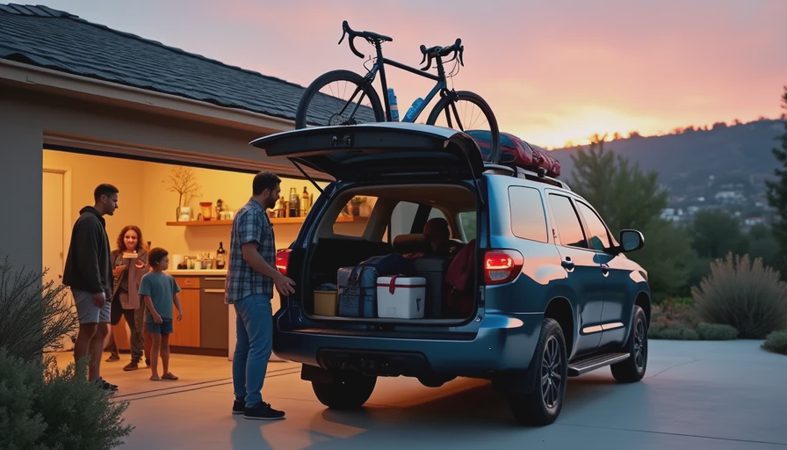
There is a unique kind of terror that sets in about 400 miles from home, somewhere in the middle of the Arizona desert or climbing an endless grade in the Sierra Nevadas, when you look down and see the temperature gauge creeping past the middle mark.
Before we had kids, my wife Lisa and I used to just throw a bag in the trunk, turn the key, and pray for the best. But life changes. Now, when we pack up the kids and load the back of a used family hauler for a cross-country road trip, hope is not a strategy.
When you buy a used car—even a reliable one with a clean record—it doesn't know you yet, and you don't really know it. Before we ever point a bumper toward state lines, every vehicle we own goes through a rigorous, real-world shakedown. Here is the exact testing routine I use to make sure a used car is truly road-trip ready.
1. The "Worst-Case Scenario" Heat and Idle Test
Highway driving at 75 mph is actually pretty easy on a car; steady airflow keeps everything cool, and the RPMs stay consistent. The real torture test for a used cooling and electrical system is urban traffic in 90-degree heat.
What I do: Before any long trip, I take the car out on a hot afternoon, turn the AC blasting on maximum, and sit in stop-and-go freeway traffic or drive through a long stretch of local errands for at least 45 minutes. What I’m looking for: Does the electric cooling fan kick on properly? Does the temperature needle stay pinned in the middle, or does it start wandering upward? If a radiator, thermostat, or water pump is on its last legs, this artificial torture test will expose it in your own town—not 500 miles away in a remote mountain pass.

2. Fluid Inspection Under Pressure
A clean driveway can be deceiving. A car that doesn’t drop oil while sitting parked overnight might leak like a sieve once the oil gets up to operating temperature and pressure out on the highway.
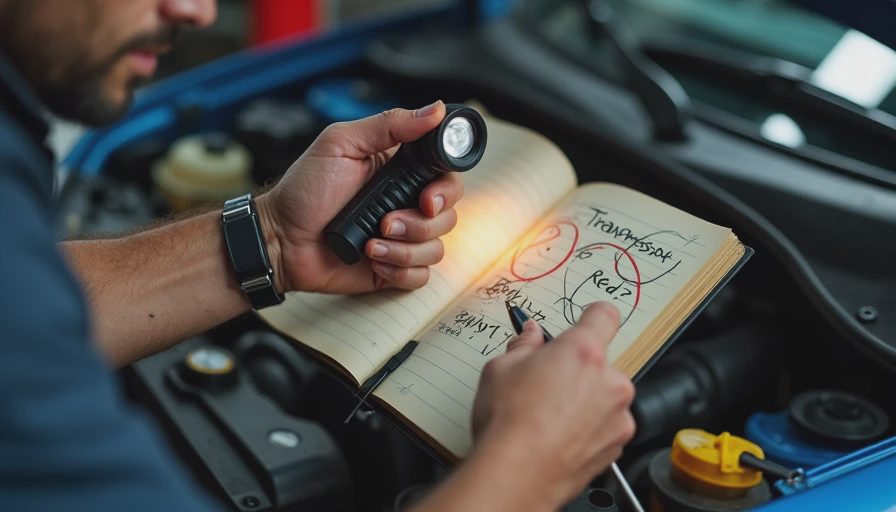
What I do: After returning from a 30-minute high-speed run on the freeway, I pull into the garage, leave the engine running for a minute, pop the hood, and grab a flashlight. What I’m looking for: I check every hose connection, valve cover gasket, and the oil pan for fresh dampness or burning smells. I also pull the transmission dipstick. Does the fluid smell burnt? Is it dark brown instead of cherry red? Road trips put massive thermal stress on transmissions; finding a degrading fluid before you leave saves you a catastrophic breakdown.
3. The 50-Mile Suspension and Tire Shakedown
A test drive around the neighborhood block tells you nothing about how a car will track at sustained highway speeds. Tires that look fine at 35 mph can develop a violent steering wheel shimmy at 70 mph due to balance issues, separated belts, or warped rotors.
What I do: I take the car onto a stretch of open interstate and get it up to cruising speed, paying close attention to the steering wheel feedback. Then, in a safe, empty area, I do a series of firm, controlled brake checks from highway speeds to see if the steering wheel pulls to one side or if the brakes pulse rhythmically. What I’m looking for: Smooth tracking, zero vibrations in the steering wheel, and straight, confident braking. If the front end shimmies now, it will fatigue you completely after six hours behind the wheel.
4. The Family "Liveability" and Cargo Stress Test
A road trip isn't just a test of machinery; it's a test of human endurance. If the seats give you lower back pain after 90 minutes, or if packing the family gear turns into an unpredictable game of Tetris every morning, the trip will be miserable.
What I do: We do a full "dry run" a week before leaving. We load up all of Sofia’s travel gear, Diego’s bags, the coolers, and emergency kits into the trunk. Then we take a mandatory two-hour loop out to the coast or up into the local mountains. What I’m looking for: Can my wife and I easily reach charging ports? Do the kids have enough legroom without kicking the front seats? Does the AC vent properly reach the third row or the back seats? Finding out that a USB port doesn't work or that a seatbelt buckle is jammed before leaving home is a lifesaver.
The Bottom Line
A cross-country road trip shouldn't feel like a gamble. By forcing a used car to prove itself locally under thermal and mechanical stress, you turn hidden surprises into manageable maintenance items.
Prep the machine, check the fluids, pack the snacks, and remember:
"Buy the car, not the story—and test it before you trust it."

