
Let’s get one thing straight right out of the gate: The guy sitting across the desk from you under the fluorescent showroom lights is not a villain. He’s not twirling a mustache. He’s not plotting how to ruin your kid’s college fund. Most of the time, he’s just a guy who woke up at 7:00 AM, put on a polyester-blend tie he hates, and is trying to hit a monthly quota so he can pay his own mortgage and keep his kids in soccer cleats.
I used to think every car salesman was a grifter out to steal my wallet. That was back when I bought my first real mistake—a "clean" 2003 Dodge Intrepid with a transmission that started slipping about three blocks past the dealership sign. I wanted to blame the salesman so badly. I wanted to storm back in there, slam my fists on his desk, and call him a crook.
The Real Problem on the Lot
Here is the truth I learned the hard way over 20 years and 18 used cars: Car salesmen aren’t your enemy, but the system is engineered so that their incentives are completely misaligned with yours.
You want a reliable machine that will get your family from point A to point B without bleeding your savings account dry.
The dealership wants to maximize gross profit on that specific unit sitting on their asphalt, clear floor plan interest, and stack their commission.
They don't have to lie to you to win; the asymmetry of information does all the heavy lifting for them. They know the car's history report inside and out, what it cost them at auction, what minor mechanical gremlin is lurking just beneath the valve cover, and exactly how much monthly payment padding your budget can absorb. You, on the other hand, are staring at shiny paint, a freshly detailed interior, and a salesperson who is genuinely friendly, offers you a bottled water, and asks about your weekend.
Charm is a powerful lubricant for a transaction.
What They Won’t Tell You (The Inside Track)
If you sit down with a veteran salesperson after hours over a beer—away from the desk manager and the floor cameras—they’ll tell you things that sound a lot like what I keep in my glovebox notebook. Here are three things they will never volunteer while you're sitting in the showroom:

1. The "First pencil" is always a negotiation anchor
When they slide that initial payment quote across the desk, it’s rarely the best they can do. It’s an psychological anchor designed to make a subsequent, slightly lower offer feel like a massive victory for you. If you negotiate against yourself because you're uncomfortable with silence, you just handed them pure profit.
2. Trade-in value and purchase price are two separate battlegrounds
A classic dealership shell game is to give you a great price on the car you're buying, only to quietly lowball you by $2,000 on your trade-in—or vice versa. They love it when buyers focus only on one number. Always negotiate the out-the-door (OTD) price first, keep your trade-in out of the conversation until the vehicle price is locked, and get separate offers from CarMax or Carvana beforehand so you know your baseline.
3. "Just $40 more a month" is a trap
Stretching a loan from 60 months to 72 or 84 months just to hit a comfortable monthly payment is how people end up underwater, owing more on a depreciating asset than it's worth. If you have to stretch the term to afford the payment, you're looking at too expensive of a car.
How to Navigate the Lot Like a Pro
You don't need to be combative, rude, or suspicious to protect yourself. In fact, being aggressive just puts the salesperson on the defensive and ruins the rapport.
Instead, operate with quiet, unshakeable preparation:
Know your numbers before you walk in. Pre-approval from a credit union or bank isn't just a financing tool; it’s a shield against high dealership interest rate markups.
Inspect the machine, not the mood. Don't let the smell of new leather or a smooth test-drive distract you from checking the tire date codes, looking for uneven panel gaps, or peeking underneath for rust.
Walk away if your gut tightens. The single most powerful tool in automotive retail is the ability to stand up, shake the salesperson's hand, and say, "Thanks for your time, but it's not the right fit." If a deal is meant to be yours, it will still be there tomorrow—or a better one will turn up.
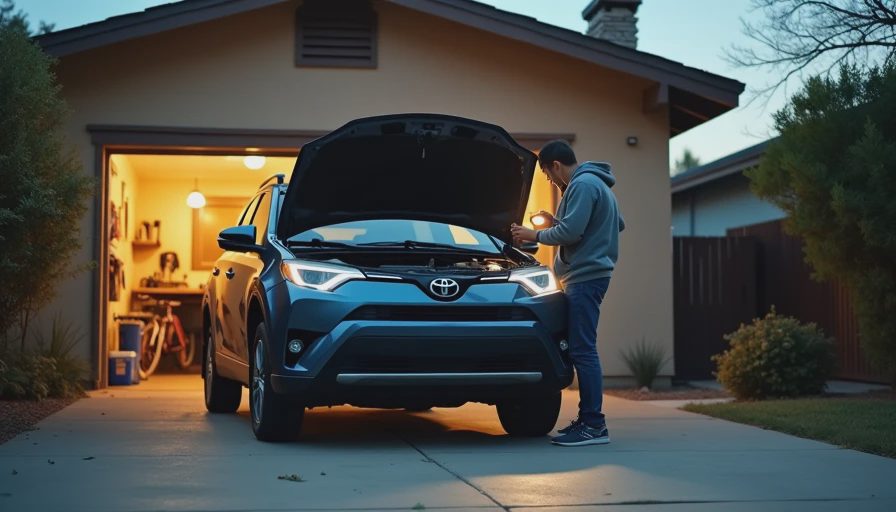
Treat the transaction like a business deal, because that's what it is. Be polite, be firm, and remember your mantra before you sign a single line of paperwork:
"Buy the car, not the story."


