
If you are asking how long can a honda accord last, you are probably looking at one with a few birthdays behind it and wondering whether the low price is a bargain or a trap. The honest answer is encouraging: a well-maintained Accord can often reach 200,000 to 300,000 miles, and some go farther. But the badge does not guarantee anything. Maintenance records, driving conditions, rust, accident damage, and the specific model year matter more than the Honda emblem on the trunk.
I have bought enough used cars to know that mileage alone is a lousy buying decision. My old 2008 Miata had more miles than some newer cars I inspected, but it had an owner who documented every oil change. Meanwhile, I once looked at a clean-looking SUV with 92,000 miles that needed a transmission. Buy the car, not the story.
The realistic mileage range
For most Honda Accords, 200,000 miles is a reasonable target when the car received regular oil changes, cooling-system service, and timely repairs. Reaching 250,000 miles is realistic for a carefully owned example. At that point, the car may still run well, but age-related repairs become part of the deal rather than an unusual surprise.
A 10-year-old Accord with 150,000 highway miles can be a better purchase than a seven-year-old car with 90,000 miles of short trips, heavy traffic, and neglected maintenance. Highway driving usually creates less brake, transmission, and suspension wear than constant stop-and-go driving. Southern California cars often avoid road salt, which helps the body, but intense heat can age batteries, rubber seals, paint, and cooling-system components.
The answer to how long can a honda accord last also depends on the engine and transmission combination. Four-cylinder Accords are generally simpler and cheaper to maintain than V6 versions, though a well-maintained V6 can also serve for many years. Some older generations used conventional automatic transmissions, while others used continuously variable transmissions, commonly called CVTs. A CVT uses a belt and pulleys rather than traditional fixed gears, so fluid service history matters.

Model years and problems worth checking
Do not treat every Accord generation as identical. Earlier 2000s models can be durable, but age brings brittle hoses, leaking seals, worn engine mounts, and neglected suspension parts. A 2003 to 2007 Accord may be inexpensive to buy, yet a $4,500 car can quickly absorb $2,000 in repairs if the timing belt, brakes, tires, and steering components are all due.
The V6 engines in many older Accords use a timing belt. That belt keeps the engine’s internal parts synchronized, and replacement is a scheduled service commonly costing roughly $800 to $1,500, depending on the shop and related parts. If it breaks, engine damage can follow. Ask for an invoice, not a verbal promise that it was “probably done.”
Some Accords from the 2008 to 2010 period deserve especially careful inspection for excessive oil consumption. Oil consumption means the engine burns or loses oil between changes. Check the level before driving, look for blue exhaust smoke, and ask whether the owner regularly added oil. Certain V6 models also have a reputation for transmission concerns, so a cold and hot test drive is essential.
Later Accords can offer better safety equipment, improved fuel economy, and more comfortable interiors, but newer does not mean maintenance-free. Turbocharged engines in some recent models can be efficient and strong while still requiring consistent oil service. A 2018 Accord with 130,000 miles and complete records may beat a neglected 2021 example with half the mileage.
What a high-mileage Accord should feel like
Start the engine when it is cold. Sellers sometimes warm a troubled car before you arrive because cold starts reveal weak batteries, noisy timing components, smoke, or rough idle. The engine should start promptly and settle into a reasonably smooth idle. A brief startup rattle deserves investigation, not a shrug.
During the drive, accelerate gently and then firmly. The transmission should shift without a harsh bang, long hesitation, or slipping sensation. In a CVT-equipped model, the engine speed may rise smoothly under acceleration; that is normal. A shudder, delayed engagement, or whining noise is not something I would ignore.
Test the brakes on an empty, safe road. Pulsing through the brake pedal can indicate warped or unevenly worn rotors. Pulling to one side may involve a brake, tire, or suspension problem. Listen over speed bumps for clunks from worn links, struts, or control-arm bushings. These repairs are not automatically deal breakers, but they should lower the price.
Inspect the air conditioner, power windows, backup camera, heated seats, and dashboard warning lights. Electrical repairs can turn a cheap commuter into a frustrating project. Before shutting the car off, scan the instrument panel again. Some warning lights appear only after the vehicle completes its startup checks.
The maintenance budget after 150,000 miles
A high-mileage Accord needs a repair reserve. I would want at least $1,500 to $2,500 available during the first year, separate from the purchase price. That is not a prediction that everything will fail. It is protection against ordinary age-related work such as tires, brakes, a battery, wheel bearings, belts, struts, or a leaking gasket.
Routine oil and filter service may cost around $50 to $120 at an independent shop, while a larger service with fluids and inspections can run several hundred dollars. A transmission service, spark plug replacement, or cooling-system repair varies by engine and location. Get a written estimate before authorizing work, and use a shop that regularly services Hondas rather than choosing solely by the lowest online coupon.
Insurance and registration also belong in your budget. An older Accord can be affordable to insure, but liability coverage limits, comprehensive coverage, collision coverage, your driving record, and your location affect the premium. If the car has little market value, compare the cost of collision coverage with the vehicle’s actual value and deductible before deciding.
My used-buying checklist
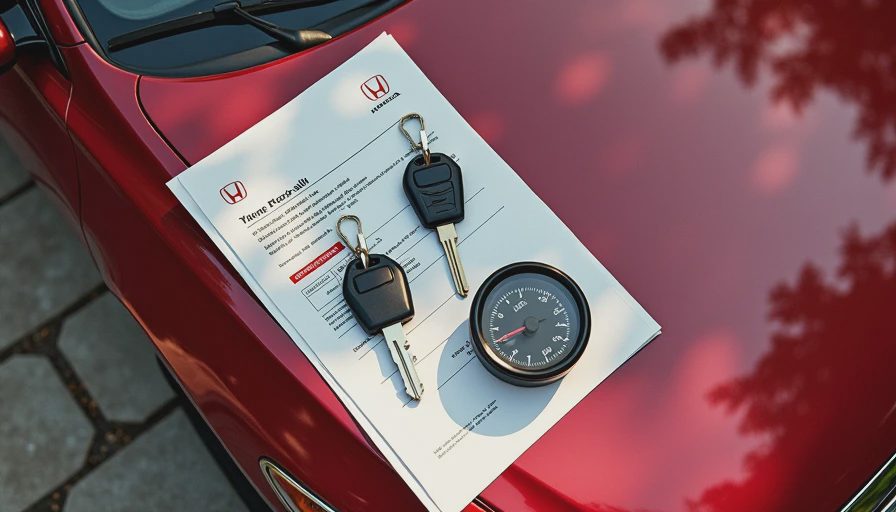
When someone asks how long can a honda accord last, I tell them to inspect the owner and the car together. First, request the vehicle identification number and run a history report, but do not treat a clean report as a mechanical inspection. Then look for service invoices, title problems, inconsistent mileage, and gaps that the seller cannot explain.
Next, inspect the car in daylight. Check panel gaps, mismatched paint, tire wear, fluid leaks, rust around the subframes, and water inside the trunk or spare-tire well. Confirm that the tire brands and tread depths are reasonably consistent. A set of four worn tires can cost $500 to $900 before installation.
Take a long enough test drive to reach operating temperature. Drive city streets, a highway, and a hill if possible. Then pay for a pre-purchase inspection by an independent mechanic. Spending $150 to $250 on that inspection is cheap compared with discovering a $4,000 transmission problem after signing the paperwork.
Finally, use the inspection findings to negotiate with numbers. “It needs work” is weak. “The tires are $700, the valve-cover leak is estimated at $450, and the timing-belt service has no proof” is useful. A seller who will not allow an inspection has already answered an important question.
The bottom line for buyers
So, how long can a honda accord last? Plan on 200,000 miles as a realistic benchmark, with 250,000 miles possible when the maintenance history is strong and the body is solid. Do not pay a premium simply because the seller says Honda reliability will carry you. Verify the records, check the transmission, budget for repairs, and inspect the car cold.
For a family car, the best Accord is not necessarily the newest or lowest-mile example. It is the one with honest ownership, predictable service, good tires, no serious warning lights, and a price that leaves room for repairs. Screenshot this checklist before you go: cold start, fluid levels, warning lights, transmission behavior, brakes, suspension, air conditioning, rust, title history, service invoices, and an independent inspection. That is how you answer how long can a honda accord last before buying one, instead of after the check clears.


