If you are searching for the best state to buy a used car, you are probably looking at a $12,000 to $25,000 purchase and wondering whether a road trip could beat local prices. Sometimes it can. Other times, the cheaper listing disappears under sales tax, transport, registration fees, and one ugly surprise from the rust belt. I have bought 18 used cars in 20 years, including one 2003 Dodge Intrepid that taught me the cost of trusting a clean Carfax. The state matters, but the individual car matters more.
The smart approach is to compare the complete deal, not the advertised number. A $14,500 Honda CR-V in a dry climate can be a better buy than a $12,900 example from a snowy state. You need to price the car, taxes, travel, inspection, title work, repairs, and insurance before deciding.
The states that look attractive on paper
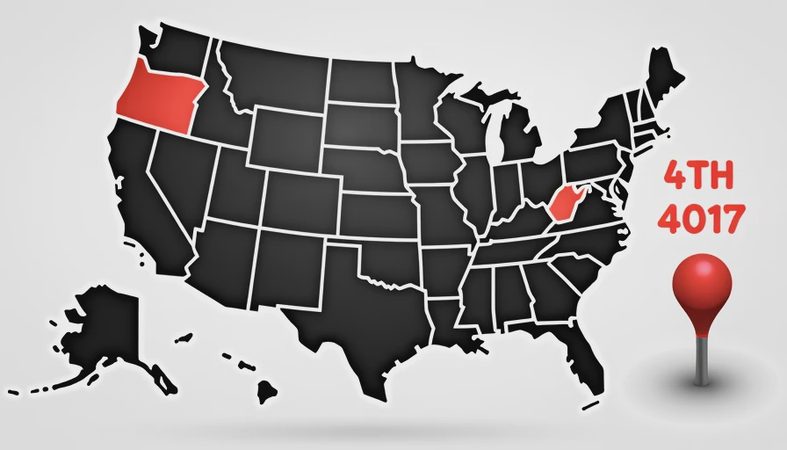
People often mention Florida, Arizona, Nevada, Oregon, and New Hampshire when discussing the best state to buy a used car. Each has a reason. Florida has a large supply of retired-lease vehicles, family SUVs, and trucks. Arizona and Nevada often have dry climates that are easier on body panels and undercarriages than places that use road salt. Oregon has no general sales tax, which can look excellent on a $20,000 purchase. New Hampshire also has no sales tax.
Here is the catch: a no-sales-tax state does not automatically let you avoid tax where you live. In many cases, your home state collects use or sales tax when you title and register the vehicle. You may also pay a documentary fee, title fee, registration charge, and temporary permit. Ask your state motor vehicle office for the actual process before handing over a deposit.
Florida deserves extra inspection attention because coastal air, flooding, and hurricane-related vehicles can create problems. A clean-looking interior does not prove a car was never exposed to water. Check the carpet, seat rails, spare-tire well, connectors, and history report. Buy the car, not the story.
Dry climate versus low price
For many buyers, the best state to buy a used car is the state that protects the vehicle underneath. Rust is not just ugly paint bubbling. It can weaken brake lines, fuel lines, suspension mounts, subframes, and fasteners. A $16,000 Subaru from a dry western area may need less immediate work than a $14,000 Subaru that spent ten winters in Michigan or Ohio.
That does not mean every northern car is a bad purchase. Some owners wash the underside regularly, garage their vehicles, and keep excellent records. A rusty car can still be fairly priced if you know what you are buying. The problem is paying dry-climate money for a vehicle with heavy corrosion.
When inspecting an out-of-state car, put the vehicle on a lift. A pre-purchase inspection usually costs around $150 to $300, depending on location and depth. Tell the mechanic to photograph subframes, rocker panels, brake lines, oil leaks, tire wear, and signs of collision repair. If the seller refuses an independent inspection, save your airfare and walk away.
Inventory changes the answer by vehicle type
The best state to buy a used car depends heavily on what sits in your driveway. Florida and Texas can offer plenty of full-size pickups, while the Pacific Northwest often has strong availability of Subarus and all-wheel-drive wagons. California has a large used-car market, but its prices can be higher in popular metro areas. That larger inventory still gives you leverage because you can reject three bad cars and keep looking at the fourth.
For a basic commuter, search nationally for Toyota Corollas, Honda Civics, Mazda3s, and older Hyundai Elantras, then compare local examples against out-of-state choices. For a family hauler, include repair history and tire condition in the comparison. Four worn tires on a Honda Pilot can cost $700 to $1,200. A weak battery, overdue brakes, and a cracked windshield can add another $800 before the first school run.
Do not limit your search to a state name. Filter by maintenance records, one-owner history, clean title, reasonable mileage, and seller willingness to share the vehicle identification number. A boring, documented 2016 Camry is usually safer than a flashy 2018 model with gaps in its history.
Calculate the real out-the-door price
Before deciding on the best state to buy a used car, build a simple worksheet. Start with the sale price. Add sales or use tax, title and registration charges, a temporary tag, inspection, travel, fuel, lodging, shipping, and the first repair reserve. If you fly in and drive home, budget for at least one night and an emergency cushion. If you ship the car, quotes commonly run from about $800 to more than $1,500 depending on distance, timing, and open or enclosed transport.
Imagine a $15,500 Ford Escape in a no-sales-tax state. A $900 flight, $250 hotel and fuel, $250 inspection, $600 in immediate tires, and $1,200 in registration and tax can push the real cost over $18,700. Your local $17,900 Escape with newer tires and a service file may actually be the bargain.
Call your insurer before purchase with the vehicle identification number. Comprehensive and collision coverage can be expensive on some models, while liability-only coverage does not pay to repair your car after an at-fault crash. Get an insurance quote, not a guess from an online listing.
A safe out-of-state buying process
Start by asking for the VIN, title status, maintenance records, cold-start video, and photos of the underbody. A seller who warms the engine before you arrive may be hiding a hard start, smoke, or noisy timing chain. Run a history report, but treat it as a clue rather than a mechanical inspection. Accident and service reporting is incomplete.
Next, call an independent shop near the vehicle and schedule an inspection before you buy. Confirm that the shop is not connected to the seller. Read the report yourself and separate safety repairs from cosmetic complaints. A $300 oil leak diagnosis is different from a $3,500 transmission problem.
For the transaction, compare the VIN on the car, title, bill of sale, insurance documents, and temporary permit. Check that the seller's name matches the title. Never accept a promise that a lien will be cleared later. Use a payment method with a clear record, and do not send a deposit simply because another buyer supposedly arrives in an hour.
My checklist before you cross state lines
The best state to buy a used car is the one where the numbers still work after inspection. Before booking a flight, confirm the total tax and registration process with your state, obtain an insurance quote, and price transportation both ways. Ask for a photo of the cold engine, tires, dashboard warning lights, title, and underbody. Schedule an independent inspection and make the purchase conditional on a clean result.
Bring a flashlight, tread-depth gauge, paper towels, and an OBD-II scanner if you know how to read one. Test the air conditioning, heat, windows, locks, backup camera, and every warning light. Drive at city speed and highway speed. Listen for humming wheel bearings, clunks over bumps, vibration under braking, and transmission hesitation.
My final rule is simple: if the savings are less than about $1,500 after every expense, buy locally and keep your weekend. If the savings are $3,000 or more and the car has strong records, a dry underbody, and a passing inspection, the trip can make sense. Take the deal that survives paperwork and a mechanic's lift. Buy the car, not the story.


