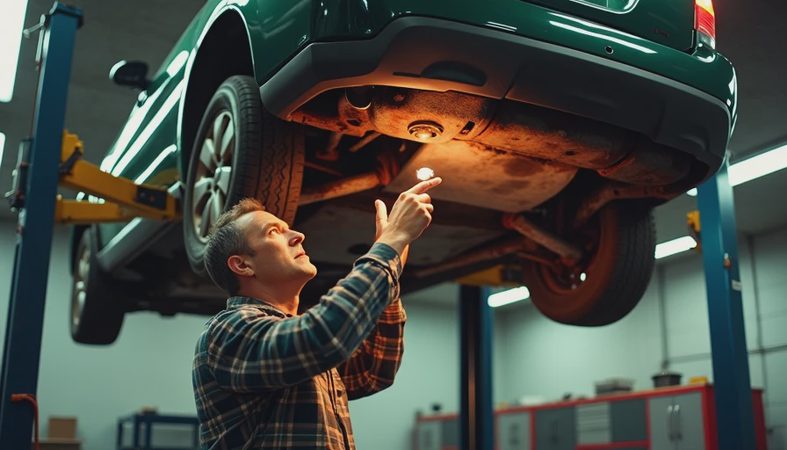
I’ve lost count of how many times I’ve watched someone fall in love with a used car on the lot, only to walk away six months later with a five-figure repair bill and a bad taste in their mouth. The story is almost always the same: the body looked solid, the engine ran quiet, Carfax was clean, and the price felt right. Then the first real rain came—or the first shop visit—and the truth crawled out from underneath.
Underbody rust is the silent dealbreaker nobody talks about. Not the sales guy. Not the private seller with the “one-owner, garage-kept” line. Not most of the YouTube videos that focus on the engine bay and the cabin. It’s the one place most buyers never look, and it’s the place that can turn a $12,000 “bargain” into a money pit faster than almost anything else.
I’ve been burned by it. More than once. Let me tell you about the car that taught me the hard way.
The 2008 Subaru Outback That Looked Perfect
Back in 2019 I found a dark-green 2008 Outback with 118,000 miles listed for $7,800. Clean title, service records, no accidents on the report. The interior was worn but honest. The engine fired right up and idled smooth. I took it for a solid 20-minute test drive on surface streets and a short stretch of freeway. Everything felt good.
I never got on my back and looked underneath with a flashlight.
Three months later a shop called me after a routine oil change. The tech had the car on a lift and said, almost apologetically, “Ray… you need to come see this.” Both rear trailing arms were rusted through in spots. The spare-tire well had soft metal. One of the exhaust hangers was hanging by a thread of metal. Estimated repair cost to make it safe again: $2,400–$3,100 depending on parts. I sold the car for $4,200 a few weeks later and ate the difference. That one still stings.
I learned the lesson the expensive way so you don’t have to.
Why Underbody Rust Is Different
Surface rust on a rocker panel or a fender lip is ugly. You can see it. You can negotiate on it. Structural or underbody rust is different. It attacks the parts that hold the car together and keep you safe: frame rails, control arms, subframes, floor pans, brake lines, fuel lines, exhaust system.
Once that metal is compromised, you’re not talking about a $300 body-shop touch-up. You’re talking about:
Replacing control arms or trailing arms
Patching or replacing floor pans
New brake or fuel lines
In bad cases, frame work that can easily exceed the value of the car
And because most of it is hidden, the car can still look and drive fine right up until the day it doesn’t.
Where It Hides (Even in California)
I live in Los Angeles. We don’t salt the roads the way they do in the Midwest or Northeast. That doesn’t mean underbody rust is rare here. Plenty of cars on California lots spent their first five or ten years in Michigan, Ohio, Pennsylvania, or upstate New York. Coastal humidity, mud from mountain roads, and years of sitting in damp garages or under trees all leave their mark.
The usual hiding spots:
Frame rails and crossmembers
Rear trailing arms and control arms (especially on Subarus, older Hondas, and many trucks)
Floor pans under the carpets and in the spare-tire well
Around the fuel tank and filler neck
Brake and fuel lines running along the frame
Exhaust system hangers and the catalytic converter heat shields
The seams where the rocker panels meet the floor
If the car ever lived anywhere that sees real winter, assume the underbody has taken some hits until you prove otherwise.
How to Check It Without a Lift
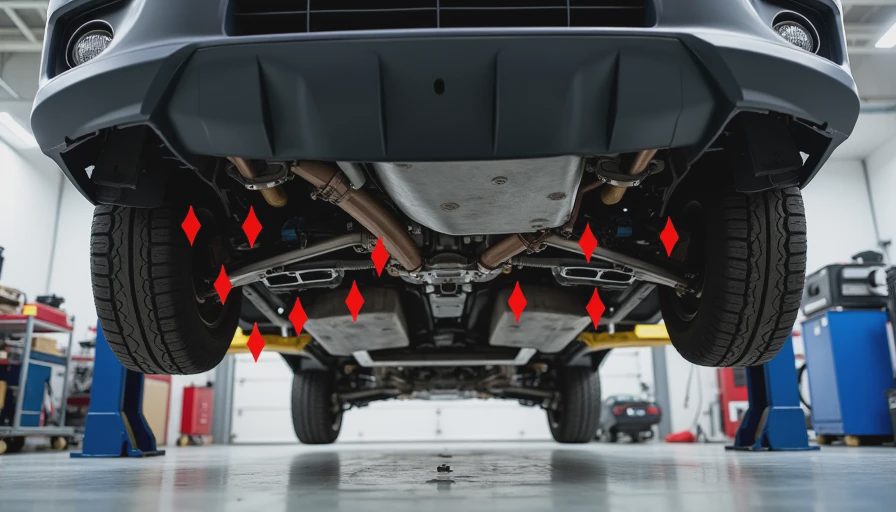
ou don’t need a shop lift or a scan tool. You need a bright flashlight (phone light is usually not enough), a pair of work gloves, and five to ten minutes of willingness to get a little dirty.
Here’s the process I use every single time:
Park on level ground and make sure the car is in Park with the parking brake set.
Get on your back (or use a low creeper if you have one) and start at the front. Shine the light along both frame rails from the front crossmember back. Look for flaking, bubbling, or holes. Healthy metal is mostly smooth and the same color. Heavy scale, deep pitting, or soft spots you can push a screwdriver into are problems.
Move to the front suspension. Check the lower control arms and the subframe mounts. Any heavy rust here can affect alignment and safety.
Slide under the middle of the car. Look at the floor pans from underneath. Soft spots or patches of heavy scale under the driver’s or passenger’s feet are red flags.
Rear suspension and trailing arms. This is where a lot of Subarus, older Accords, and many trucks get hit hard. Check both sides.
Spare-tire well and rear floor. If you can, pop the spare out and look inside the well. Then check the rear frame rails and the area around the fuel tank.
Brake and fuel lines. Follow the metal lines with your eyes. Surface rust is common. Deep flaking or lines that look swollen or crusty need closer inspection.
Exhaust hangers and heat shields. Loose or broken hangers from rusted-through metal are common and cheap to fix… until the whole system starts falling down.
If the car is too low to the ground to get under comfortably, ask the seller if you can take it to a shop for a $50–$100 pre-purchase inspection that includes the underbody. Most independent shops will put it on a lift for a quick look. It’s the cheapest insurance you can buy.
What “Bad” Looks Like vs What You Can Live With
Not every speck of rust is a deal-killer. Here’s how I sort it:
Walk-away territory
Holes in frame rails or crossmembers
Control arms or trailing arms with deep pitting or soft metal
Floor pans that flex when you push on them
Brake or fuel lines that are heavily scaled and look ready to fail
Any structural member that has already been “repaired” with body filler or poorly welded patches
Negotiable but worth serious money off the price
Heavy surface scale on non-structural parts
Rusted exhaust hangers or heat shields
Surface rust on the underside of the floor pans that hasn’t eaten through
Older undercoating that has cracked and trapped moisture
Usually fine
Light surface rust on the exhaust system itself
Minor surface oxidation on suspension components that still have solid metal underneath
Factory undercoating that is intact and still doing its job
When in doubt, get a second set of eyes from a shop that doesn’t sell cars.
A Few Practical Tips From the Garage
Bring a small mirror and a bright flashlight. Sometimes you can see into tight spots without fully crawling under.
Tap suspect areas lightly with a small screwdriver or the plastic handle of a tool. Solid metal sounds different from thin, rusty metal.
If the seller has already undercoated or painted the underside heavily, be extra suspicious. Fresh black paint can hide a lot of sins.
Ask where the car spent its life. “Always in California” is better than “Came from Minnesota three years ago,” but neither is a guarantee.
On higher-mileage cars (150k+), assume some underbody work may be needed eventually and factor that into the price.
The Printable Underbody Check (Screenshot This)
Before you hand over money, run through this list:
Frame rails (both sides, full length) – solid or soft?
Front lower control arms and subframe mounts
Floor pans under front seats
Rear trailing arms / control arms
Spare-tire well and rear floor
Area around fuel tank
Brake and fuel lines
Exhaust hangers and heat shields
Any previous undercoating or “rust repair” that looks recent
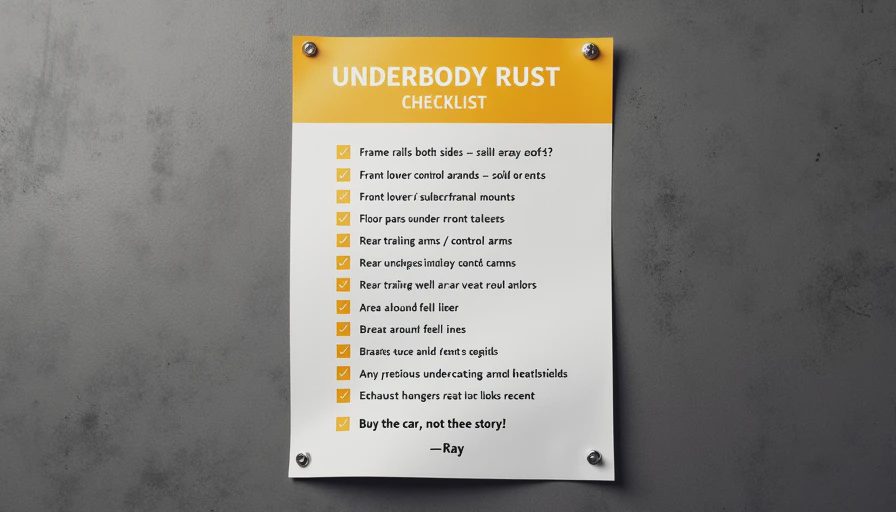
Buy the car, not the story.


