If you are wondering how to get the best deal on a used car, start by forgetting the shiny price written on the windshield. That number is only the beginning. The real deal includes the vehicle's history, mechanical condition, financing, taxes, fees, insurance, and how long it will serve your family. I have bought 18 used cars over 20 years, and I have paid for several lessons the expensive way. The biggest one is simple: buy the car, not the story.
Start With the Total Budget, Not the Monthly Payment
Before searching listings, choose the maximum out-the-door amount you can handle. A $15,000 vehicle can become $17,000 or more after sales tax, registration, documentation fees, and optional products. If you focus only on a $300 monthly payment, a salesperson can stretch the loan term and make an expensive car look affordable.
Write down three numbers: purchase price, estimated taxes and fees, and the first-year repair reserve. I like keeping at least $1,000 to $2,000 available for tires, brakes, fluids, a battery, or a sensor that fails shortly after purchase. A used 2016 Honda CR-V listed at $16,500 might be a better buy than a $14,500 example with worn tires and deferred maintenance.
Get an insurance quote using the vehicle identification number before you commit. A turbocharged Ford Escape, an older Subaru, and a basic Toyota Corolla can have noticeably different premiums. The best deal is the car that fits the entire household budget, not merely the one with the lowest advertised price.
Research Comparable Cars Before You Negotiate
Learning how to get the best deal on a used car means knowing what similar cars actually sell for. Search several listings for the same model year, trim, mileage range, drivetrain, and general condition. Kelley Blue Book and Edmunds are useful starting points, but local listings often reveal the strongest comparison. A clean, one-owner Corolla with 72,000 miles should not be priced like a rough example with 130,000 miles.
Record at least five comparable vehicles in your phone. Note the asking price, mileage, accident history, number of owners, service records, and how long each listing has been active. A car priced $1,000 above the local average needs a reason, such as new tires, documented timing-belt service, or unusually low mileage. “Dealer maintained” is not proof. Ask for invoices, inspection sheets, and dates.
Private-party sellers sometimes offer lower prices, while dealers may provide easier financing and more consistent paperwork. Neither source automatically gives you a better deal. The condition and documentation matter more than the sign in the window.
Inspect the Car Before Discussing Price
Never negotiate seriously before inspecting and driving the vehicle. Look at it in daylight with the engine cold. A warm engine can hide hard starting, smoke, or rough idle. Check whether the paint color changes between panels, whether gaps look uneven, and whether the tires wear evenly. Uneven wear can point to an alignment, suspension, or accident-repair problem.
Inside, test every switch, window, lock, air-conditioning setting, seat adjustment, backup camera, and warning light. During the drive, listen for clunks over bumps and vibration while braking. The transmission should shift without a harsh bang or long hesitation. On a freeway entrance, make sure the engine accelerates smoothly rather than stumbling under load.
A pre-purchase inspection from an independent mechanic usually costs about $100 to $250. That is cheap protection on a $12,000 or $20,000 purchase. The seller does not have to accept every repair recommendation, but refusing any inspection is a strong reason to leave. I skipped this step on a 2003 Dodge Intrepid because the Carfax looked clean. The transmission disappeared soon afterward, and the repair cost more than the car was worth.
Use the Vehicle History Report Carefully
A clean history report is helpful, but it is not a mechanical certificate. Reports can miss accidents, flood exposure, odometer problems, and repairs completed without an insurance claim. Compare the report's mileage entries with the title, service invoices, inspection stickers, and dashboard reading. A sudden mileage jump or a long unexplained gap deserves a direct question.
Check whether the title is branded as salvage, rebuilt, flood, or lemon law. Those labels can affect financing, insurance, resale value, and safety. Ask why the seller is moving the car and listen for a clear answer. “I just need something bigger” is not automatically suspicious, but a vague story combined with missing records should lower your offer or end the conversation.
How to get the best deal on a used car often comes down to rejecting the wrong car quickly. Do not spend three hours persuading yourself that a cracked windshield, mismatched tires, and an illuminated airbag light are minor details. Walk away while your money is still in your account.
Negotiate the Right Way
Negotiate the vehicle price separately from financing, trade-in value, and add-ons. If you have a trade, research its value first and agree on the replacement car before discussing it. Otherwise, a dealer can move numbers between the purchase price and trade allowance until the final deal becomes difficult to understand.
Make a specific offer supported by facts. “I found three similar cars between $14,800 and $15,600, and this one needs tires and a brake service. I can offer $14,500 before taxes and required fees” is stronger than “What is your lowest price?” Give the seller a reasonable opportunity to respond, then stay quiet. You do not need to fill the silence.
Financing through a bank or credit union gives you a useful comparison rate. Let the dealer beat that offer if possible, but examine the annual percentage rate, loan term, total interest, and amount financed. A lower monthly payment over 72 months can cost much more than a shorter loan. Decline add-ons you do not understand, including paint protection, service contracts, and theft products that inflate the balance.
Finish With a Written Checklist
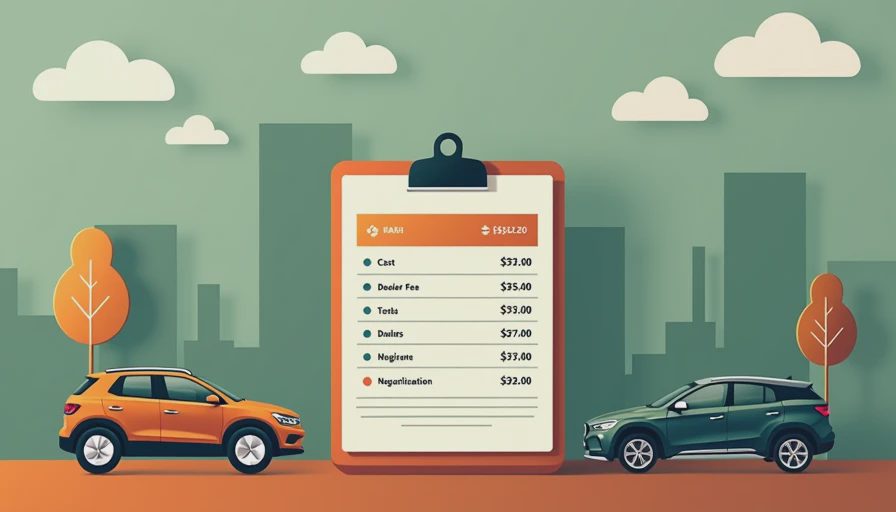
Before signing, confirm the vehicle identification number matches the car, title, insurance documents, and contract. Read the buyer's order line by line. Look for the agreed price, taxes, registration, documentation fee, lender charges, trade allowance, down payment, and final amount financed. Ask for copies of every signed document and every service record.
My printable lot checklist is simple: compare five local listings; get an insurance quote; inspect the car cold; drive it in traffic and at highway speed; verify the title and mileage; pay for an independent inspection; compare outside financing; negotiate the out-the-door price; reject unexplained add-ons; and sleep on the decision if the seller creates pressure.
That is how to get the best deal on a used car without relying on luck. You are not trying to win an argument or shave every last dollar from a seller. You are trying to buy a sound vehicle at a fair total cost. If the inspection finds a $1,200 problem, leaving is a $1,200 savings. Buy the car, not the story.


