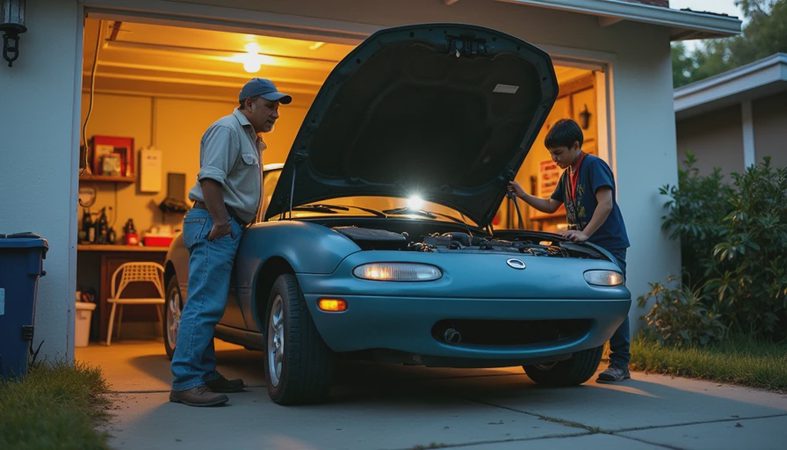
My son Diego turned fourteen last month, which means two things in our house: he has officially mastered the art of eating us out of house and home in a single weekend, and he just got his learner’s permit.
For most kids, a permit means freedom. For Diego, it means he is now an indentured servant to my weekend garage projects.
Last Saturday, we were standing under the hood of our beat-up 2008 Miata—my sanity project and his rolling classroom—while I tried to explain why his mother gets nervous when the oil pressure light flickers. As he handed me a 10mm socket (which, naturally, vanished into the nether regions of the engine bay within three minutes), it hit me.
Watching him learn how machines actually work, long before he ever worries about car payments or insurance premiums, made me realize something: He is learning the right lessons at the exact right time. Lessons I had to learn the hard way, through expensive mistakes and burned fingers.
If I could hop in a time machine and whisper three truths about cars into my own teenage ear back in 1996, here is what I’d say.
1. A Clean Paint Job Can Hide a Murderer
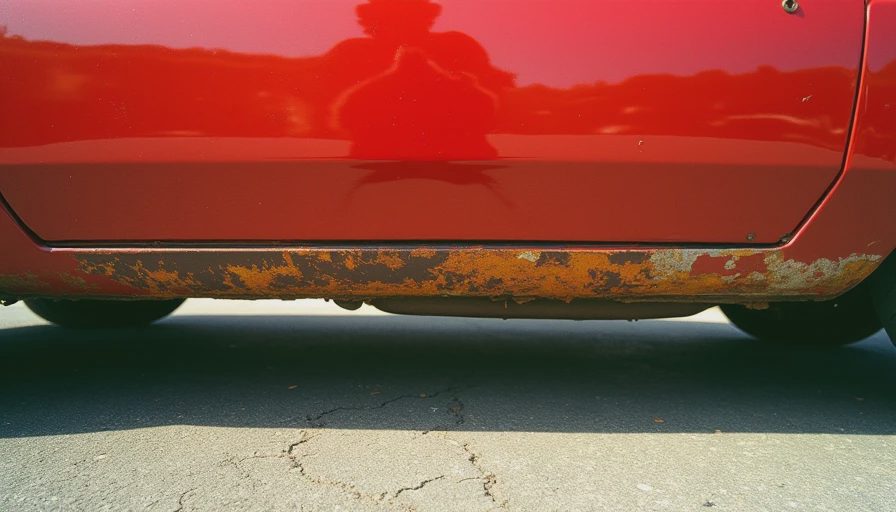
When I was sixteen, I bought a car purely based on how it looked under the dealer’s showroom lights. It had shiny red paint, cool aftermarket rims, and an interior that didn't smell like wet dog. I thought I was getting a steal. Three weeks later, the subframe rusted through on a pothole because I didn't know to look under the car.
Diego’s first lesson in the driveway wasn’t about horsepowers or top speeds. It was about flashlights and rust.
Before we even talked about turning a key, I handed him a heavy-duty flashlight and made him crawl on his stomach to inspect the rocker panels and frame rails of our project car.
"Never fall in love with the exterior," I told him, wiping grease off my thumb. "The seller is selling you the makeup. Your job is to check the skin underneath."
He’s learning early that a ugly car with a rock-solid mechanical foundation and zero structural rust will outlive a pretty lemon every single day of the week.
2. Maintenance History Beats Low Mileage Every Time
When kids start dreaming about their first car, they fixate on a magic number: the odometer. “Dad, it only has 60,000 miles!” I used to think the same thing. Then I bought a low-mileage sedan from an elderly owner who apparently believed oil changes were a hoax perpetrated by big lube. The engine seized up by summer.
I’m drilling a simple mantra into Diego’s head: Buy the owner, not the odometer.
We spent an hour last weekend going through a binder of old service receipts for the family Odyssey. I showed him how a car with 150,000 highway miles that has had its transmission fluid changed every 30k is infinitely safer to buy than a 70,000-mile commuter car that has never seen a wrench in its life.
He’s learning to read paper trails—oil change dates, brake pad receipts, inspection notes—like a detective. When he gets his own car one day, he won't be dazzled by a low number on the dash; he’ll want to see the receipts that prove the car was actually cared for.
3. Turning a Wrench Teaches You Patience (and Humility)
Kids today grow up in an instant-gratification world. You tap a screen, food arrives. You click a button, a package shows up on the porch.
Cars do not care about your high-speed internet.
When Diego stripped his first bolt while helping me change the brake pads on the Miata last month, he got visibly frustrated, ready to throw the ratchet across the driveway. That’s when we took a five-minute break for a soda and I told him about my 2003 Dodge Intrepid—the ultimate lemon of my youth that taught me patience through sheer financial trauma.
Working on cars is humbling. It forces you to slow down, use the right tool, and accept that sometimes you have to take things apart twice to get them right.
Watching him carefully torque down a bolt, double-checking his work instead of rushing to finish so he can get back to his video games, tells me he’s picking up something far more valuable than mechanical skills. He’s learning accountability.
The Bottom Line
Diego still has a lot to learn before he takes his driving test on the real streets of Los Angeles, and I know he’s going to make mistakes. He’ll probably buy a bad car at some point despite all my warnings—just like every generation before him.
But watching him look past the shiny paint, respect the maintenance schedule, and get his hands dirty in the garage gives me hope.
He’s learning how to look beneath the surface, a skill that goes way beyond four wheels and a steering wheel. And honestly? If it saves him from ever buying a car with a disappearing transmission and a "clean" Carfax, then those dusty Saturdays in the driveway are worth every second.
"Buy the car, not the story—and teach the next generation to look under the hood before they look at the price tag."


